
Bespoke Markilux Awnings Solution for Residential Atrium – Westbourne Grove, London W11
At a Glance
- The Challenge: A high-specification property in Notting Hill, already well into a long-term construction project, where two oversized skylights (spanning 5 metres wide) were causing substantial solar gain and heat build-up over a double-height atrium. An internal solution had been requested, but Aquarius Blinds identified a superior external alternative that would offer better long-term value.
- The Solution: Two Markilux 8800 Tracfix awning systems, specified for their exceptional span capability and clean retracted profile, to be installed on the outside. To accommodate a completed liquid-applied roof membrane and a site free from scaffolding, bespoke fabricated brackets with integrated fixing points (IFP) to cold roof construction, with a hydraulic lift solution to elevate the awnings in phases to the roof level.
- The Outcome: A seamless, fully automated external shading system integrated with the client’s Lutron building management system, delivering up to 97% solar heat reduction. Complete with sensor-controlled deployment, and an invisible retracted profile that preserves the atrium’s clean architectural lines.
Appointed late in the construction phase, operating on a live site with a fully intact roof membrane and no scaffolding in place, Aquarius Blinds engineered a bespoke awnings solution from the ground up, and delivered it in a single day
The Challenge: A Late Appointment on a Complex Building Site
When Aquarius Blinds was brought into the project at Westbourne Grove, the construction was well underway. The London-based Westgreen Construction Ltd had been managing the wider refurbishment for several months, and the initial enquiry reached us via the architect, Studioshaw Ltd. The brief was far from straightforward, because mid-build, a problem had materialised.
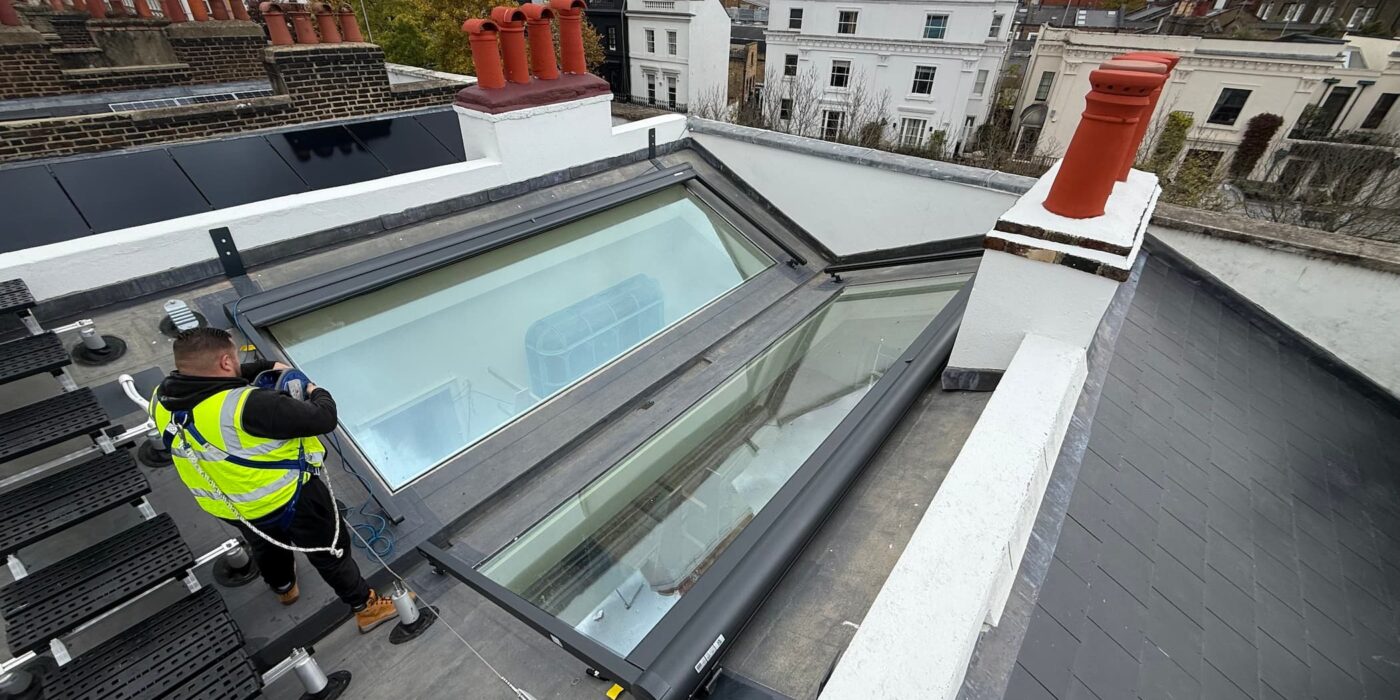
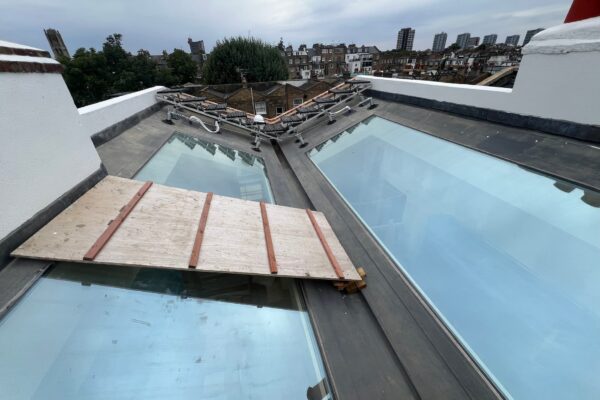
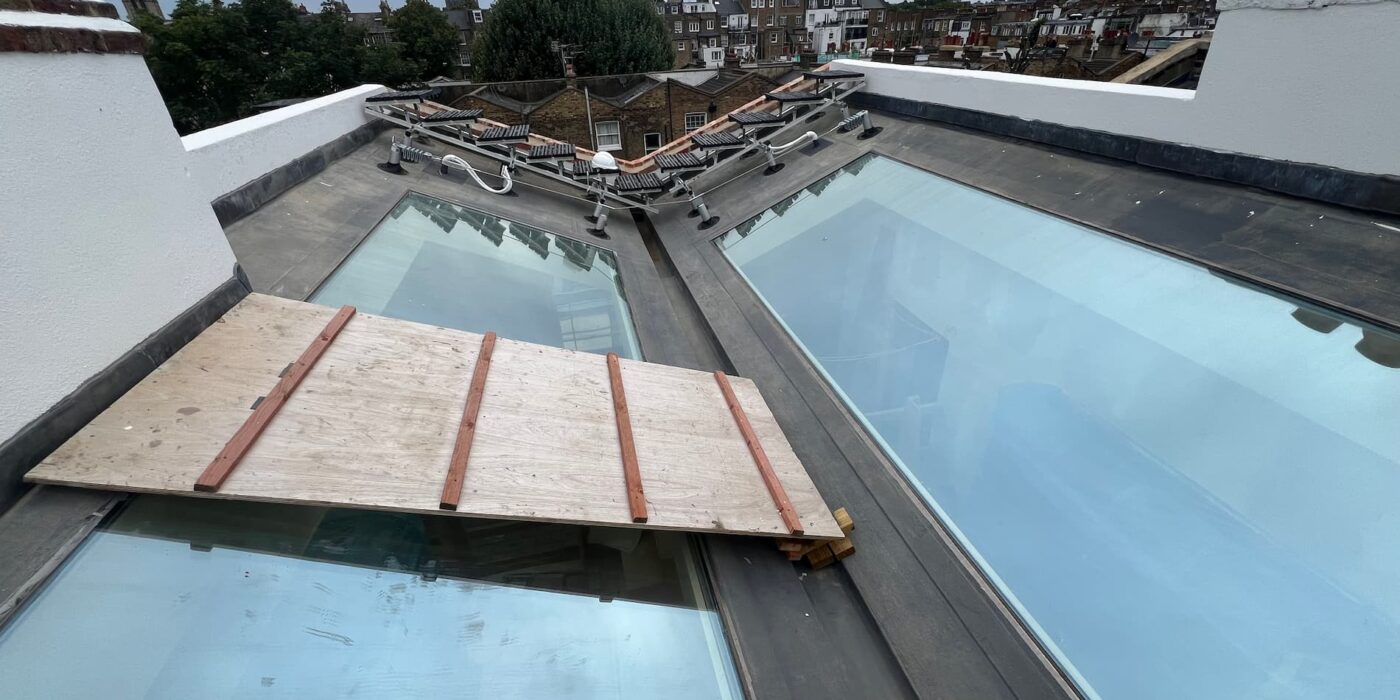
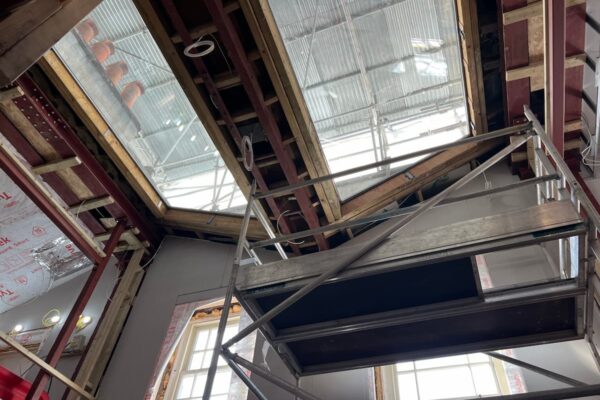
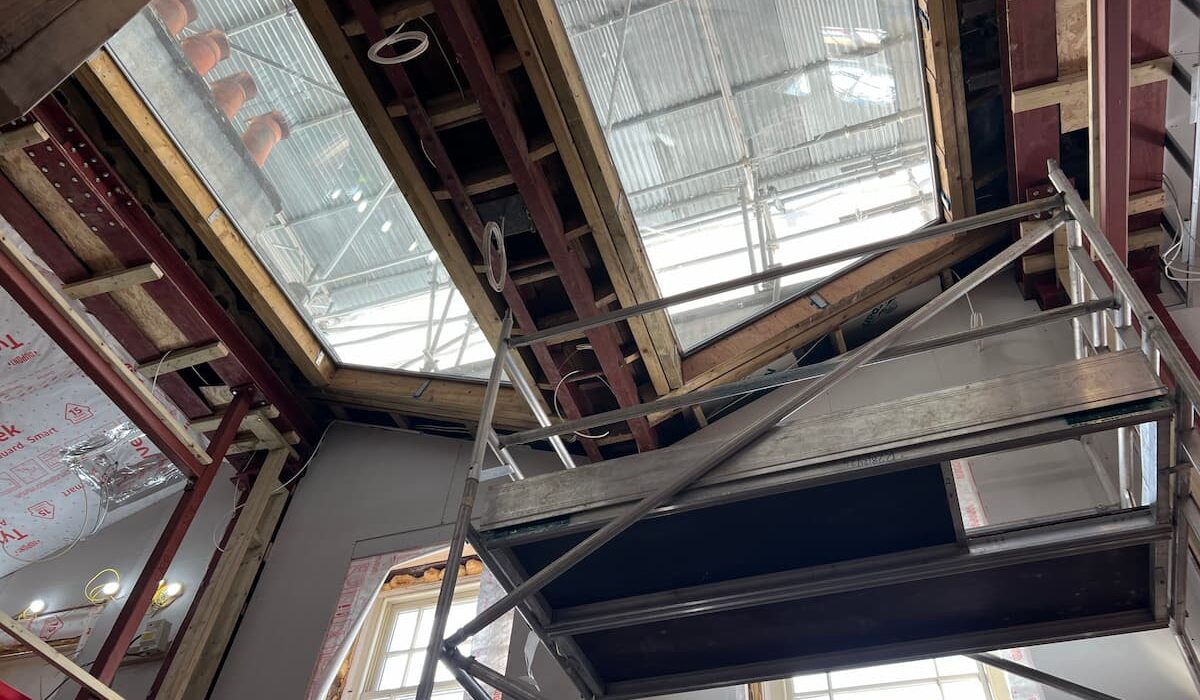
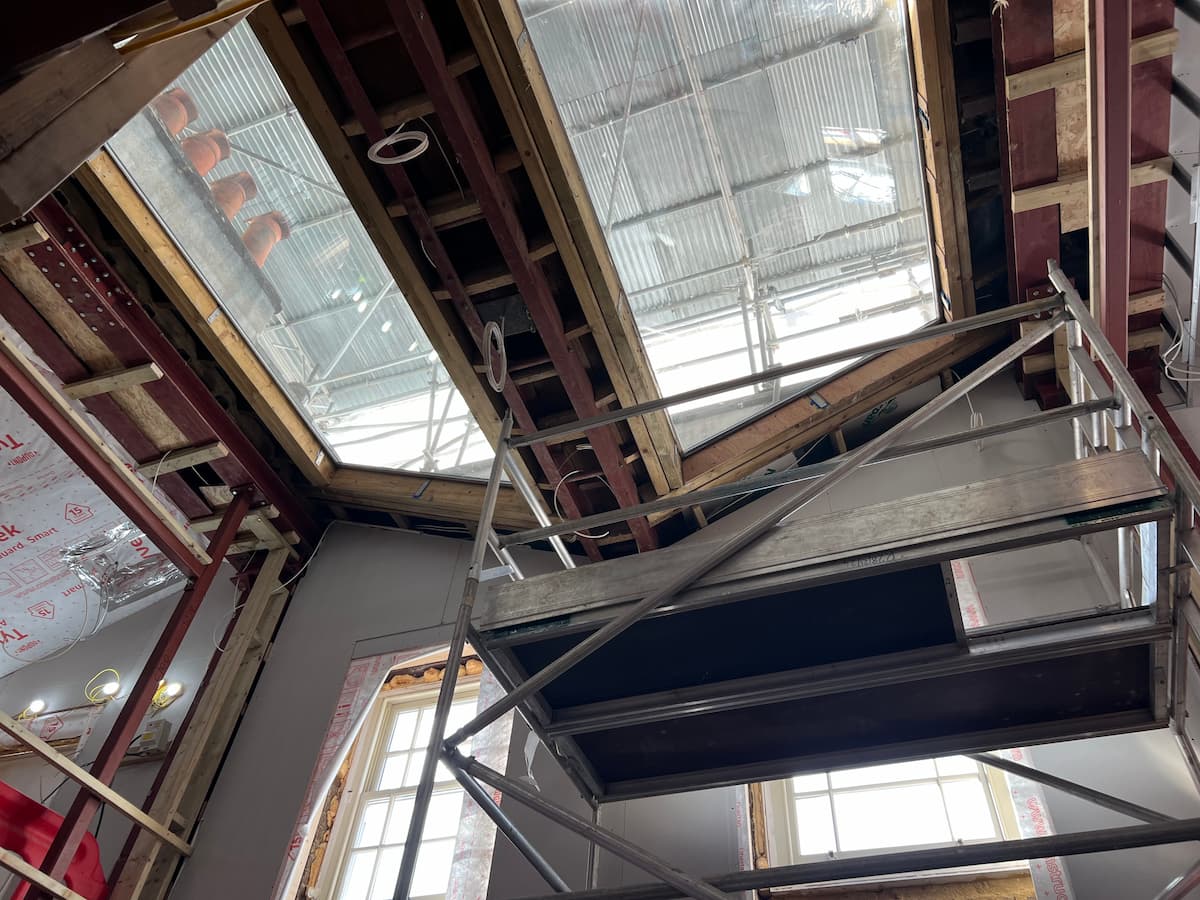
The Westbourne Grove property featured two large roof skylights spanning a double-height atrium, each measuring 5 metres wide by 2 metres high. The glazed area was already an area of concern:
- Solar gain was substantial
- The internal temperature (when exposed to long periods of direct sun) was high
- The owners were focused on what the long-term solution would look like, aesthetically and functionally
Aquarius Blinds were initially contacted for an internal shading solution. However, once we had the opportunity to discuss the project in full via Teams with the architect and contractor, it became abundantly clear that an internal approach would, effectively, paper over the cracks. It would only address the symptoms rather than the cause.
This is why we recommended an external system. Our reasoning was straightforward:
- Stopping solar energy before it penetrates glass is more effective than dealing with it once it’s entered the space.
- This was backed up by research from the British Blind and Shutter Association (BSSA), suggesting that external shading can reduce internal temperatures by up to 19.5°C compared with unshaded glazing
That recommendation set the direction for everything that transpired afterwards. The product of choice was the Markilux 8800 Tracfix, a high-quality over-glass awning system that can span up to 7 metres in a single unit and with the option to couple multiple sections across spacious glass roofs. We recommended this system for its aesthetic benefits too; when retracted, the system all but disappears, leaving the atrium’s glazing clean, uninterrupted, and architecturally cohesive, which is precisely what the project demanded.
The Site: A Completed Roof and No Scaffolding
Being appointed late on in the construction stage is challenging in its own right. This project brought two key constraints that required Aquarius Blinds to be adaptable and proactive.
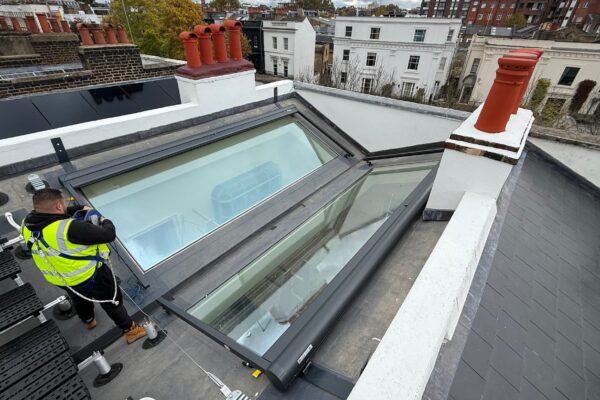
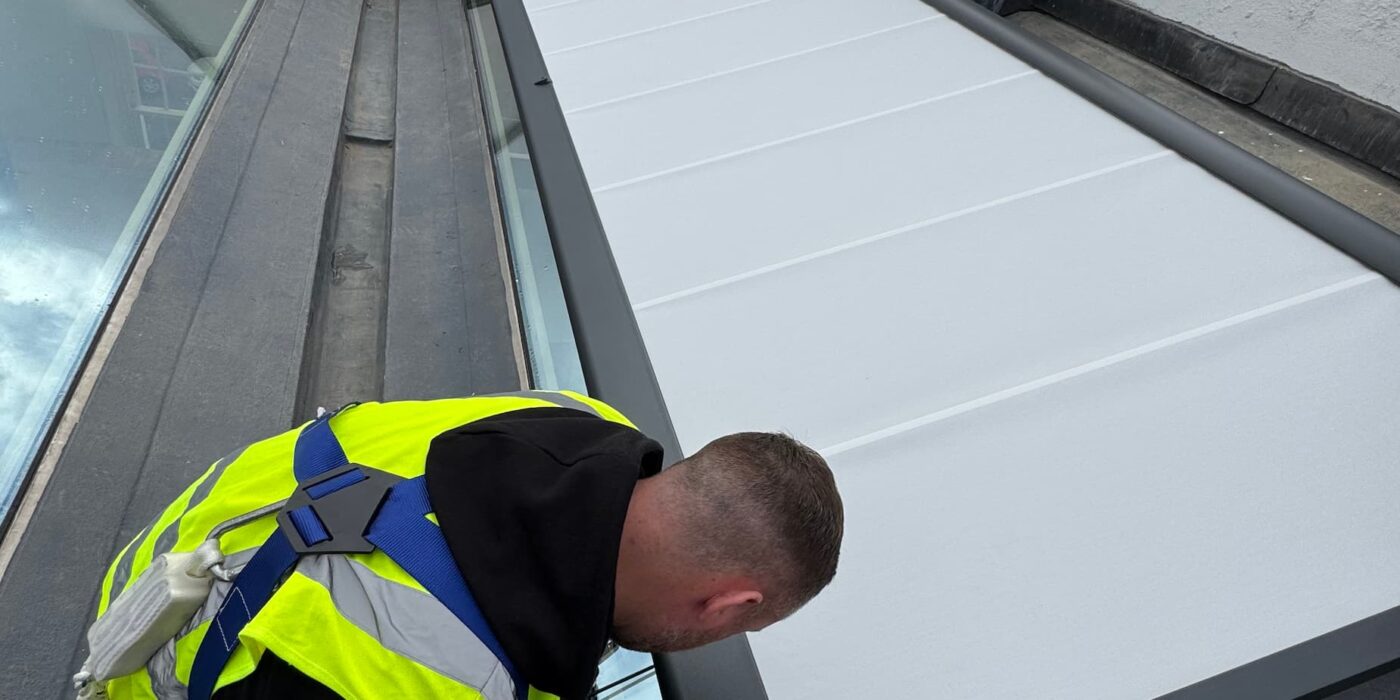
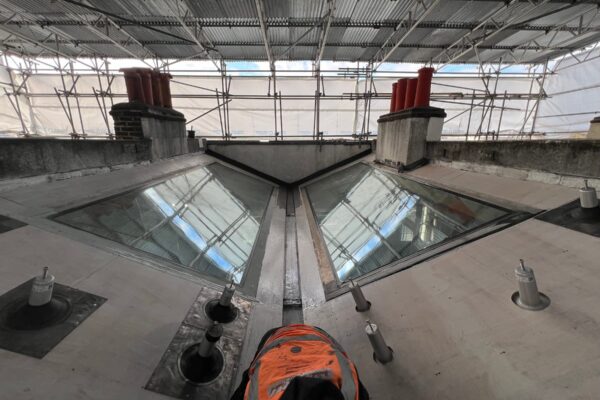
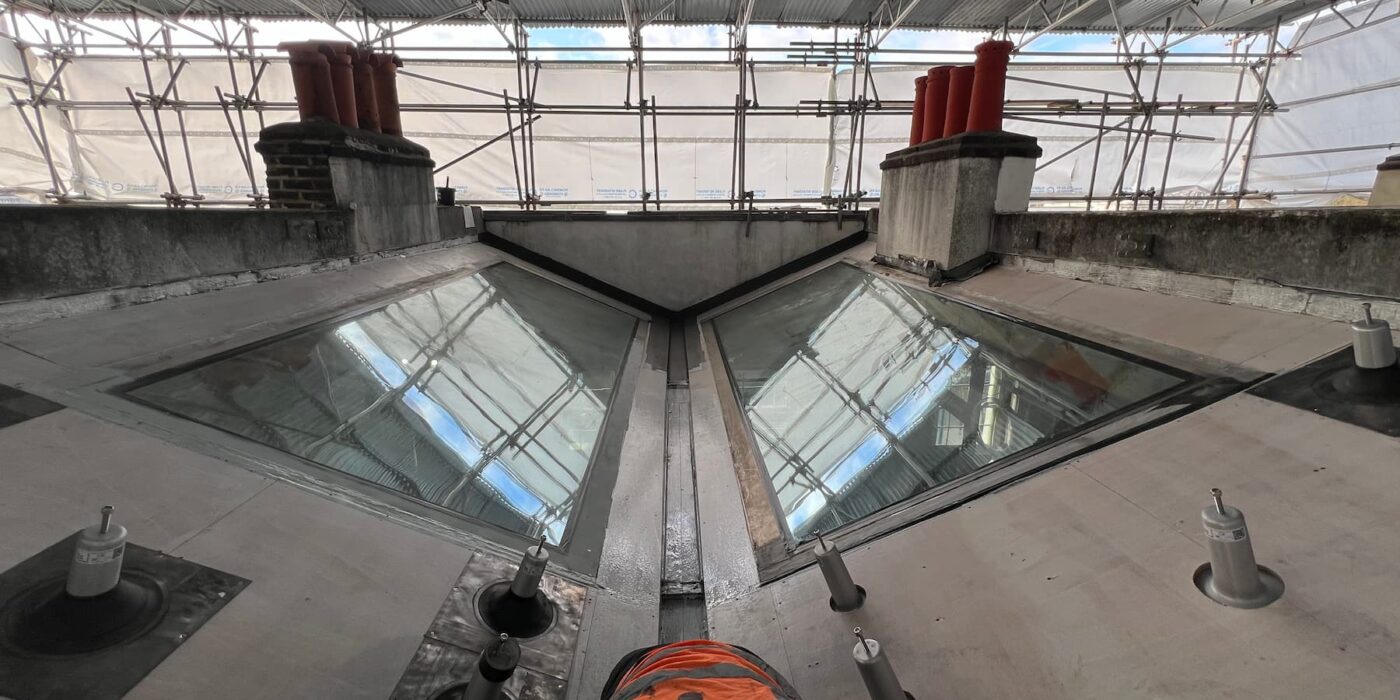
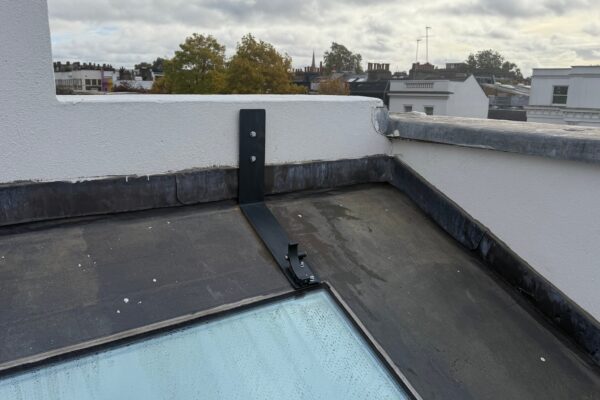
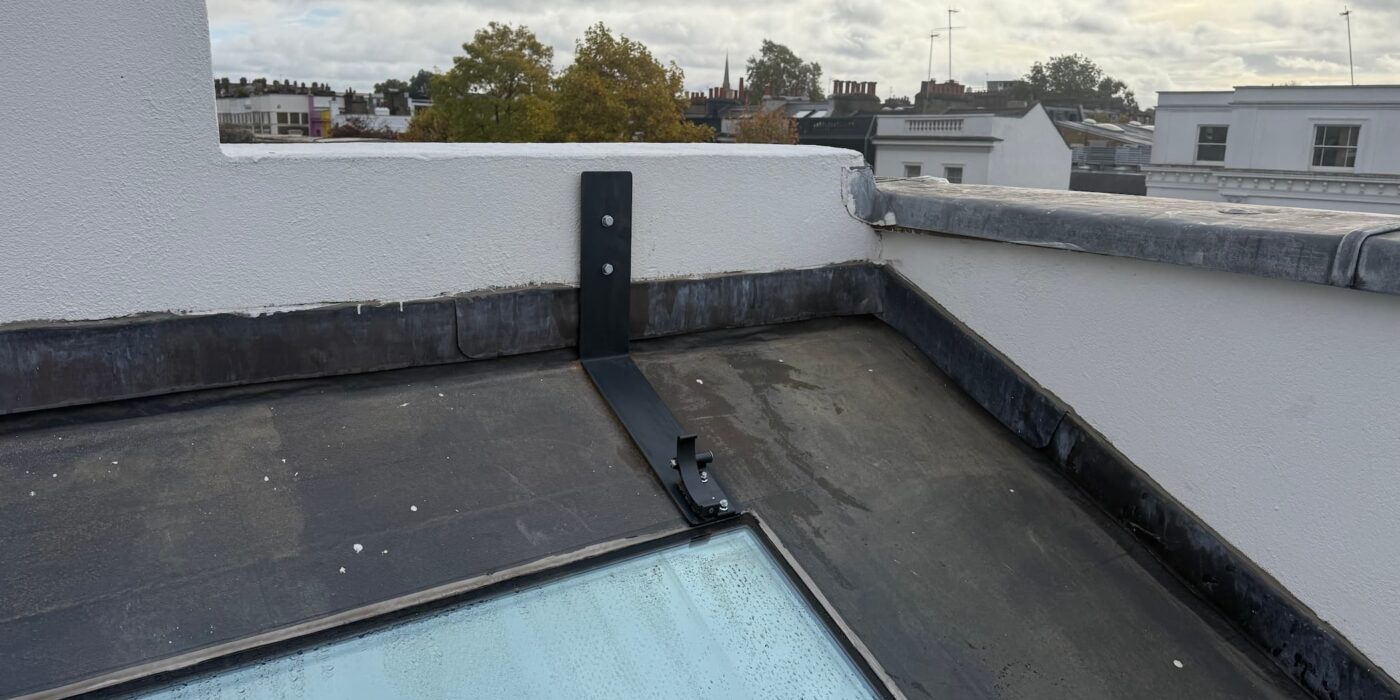
- The roof membrane waterproofing had already been completed. This made any penetration or conventional surface fixing risky as it could compromise its stability and long-term weather resistance. Therefore, off-the-shelf bracket awnings wouldn’t suffice here. Working closely with Studioshaw Ltd and the roofing contractor, Aquarius Blinds designed the steel brackets entirely in-house, from initial design through to production within our own metalwork fabrication facility, before powder-coating them in anthracite 5204 to match the finish specification of Markilux, our German manufacturing partner. The brackets were engineered to distribute load correctly across the parapet wall, which was the primary structural fixing point. This was achieved while using Integrated Fixing Points (IFP) specially developed for cold roof construction. IFPs are designed to pass through the membrane at controlled, watertight junctions, protecting the envelope while providing secure, load-rated fixing points for the leg supports. Full CAD drawings and details were produced and reviewed by the project team prior to fabrication.
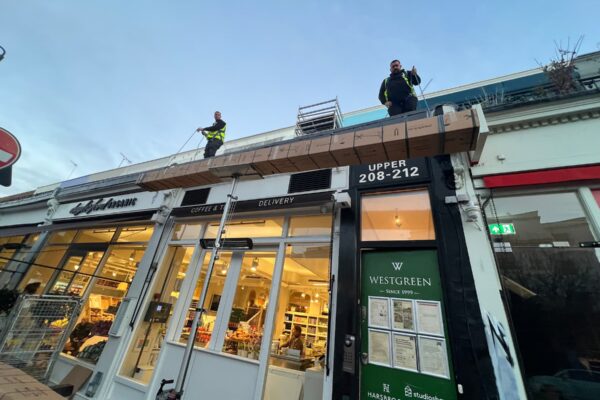
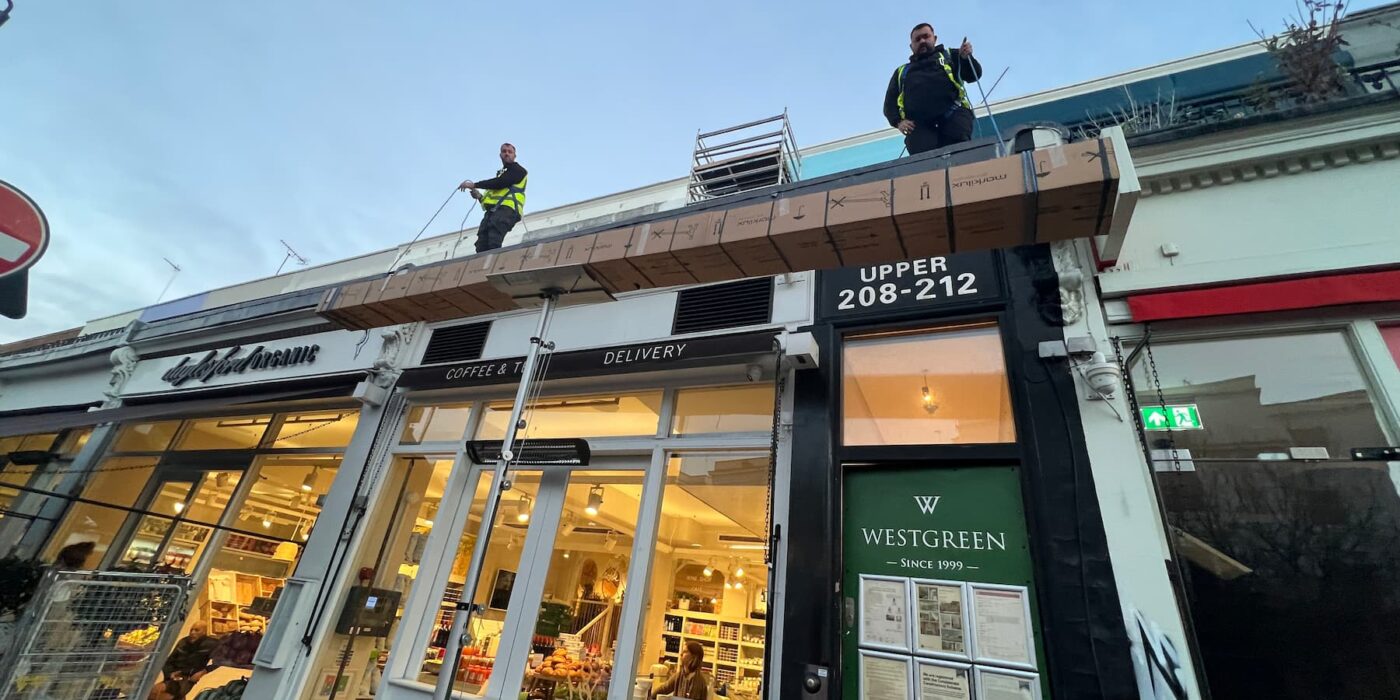
- Access was also a challenge. The scaffolding had been struck and removed before our units were ready to be installed. In most instances, this would mean reintroducing temporary access, which can be costly, time-consuming, disruptive, and resource-intensive, particularly when nearing the project completion date. Instead, the Aquarius team deployed our quality hydraulic lift apparatus, raising the two Markilux 8800 awnings from street level to the front terrace, before lifting them up from there to the fourth-floor roof area. This carefully staged operation meant that no extra scaffolding was necessary and the wider site work remained uninterrupted.
The Execution: Precise Engineering, Automation, and Only One Day On Site
The design and specification phase ran over a period of 10 weeks, during which we coordinated closely with Studioshaw Ltd and Westgreen Construction to ensure our design and fabrication processes could align with the wider programme.
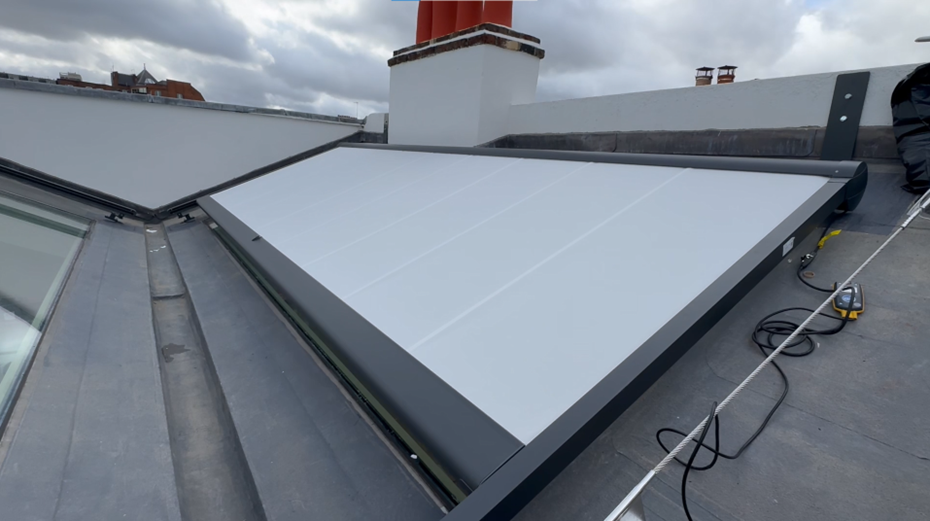
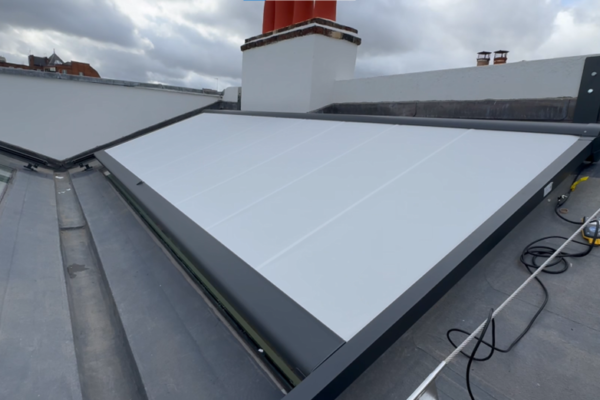
The Markilux 8800 Tracfix units were configured to provide full coverage across both skylights with no intermediate visual supports. For this project, the configuration was determined by the precise dimensions of each skylight so that enough coverage could be engineered pre-integration.
Automation was also pivotal to the brief, and the integration request was handled with optimal care. The two awnings were linked to three different sensor inputs:
- A rain sensor, triggering automatic retraction to protect the fabric when rain is detected
- A wind sensor, providing protection against heavy winds
- A solar sensor, deploying the awnings automatically when irradiation levels are high
The connection to the client’s Lutron building management system was achieved using a Somfy RS485 interface unit, ensuring the awnings operate fully within the wider smart environment of the property. Luckily, this is controllable via the same interface as the rest of the incumbent building system.
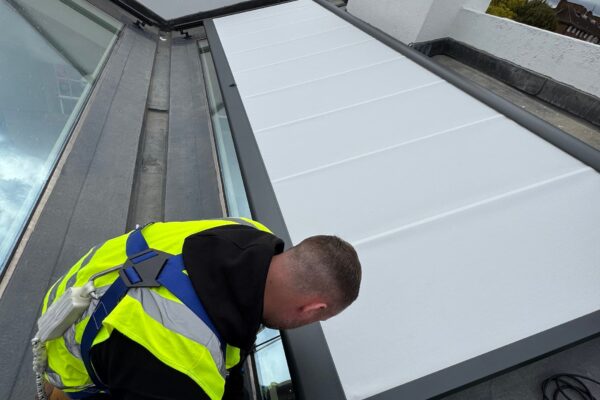
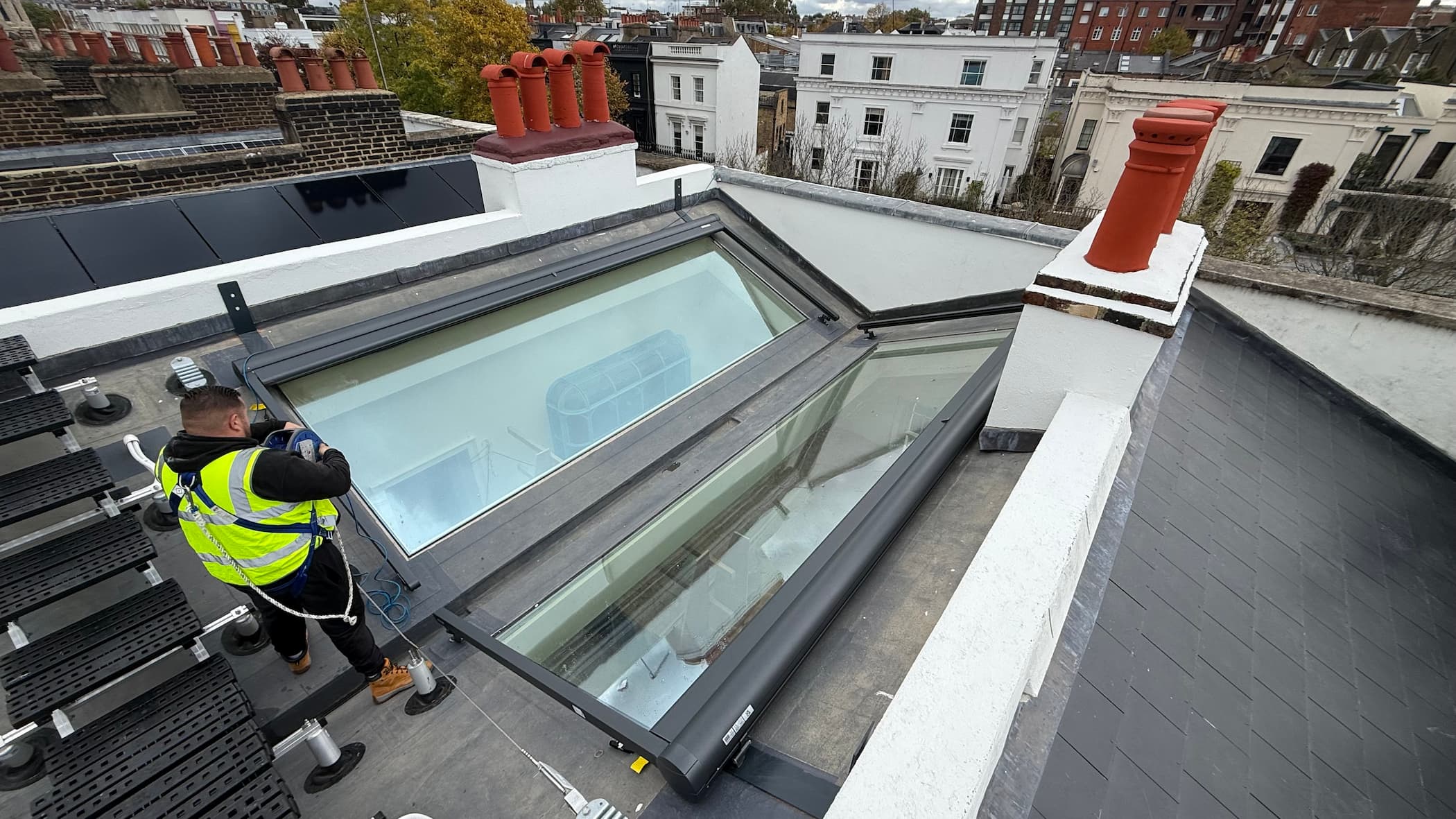
Even with the 10-week design phase, the installation itself was completed within a single day. Our team arrived on site with the prefabricated units in tow, raised them to roof level using our hydraulic lift, positioned them onto the pre-installed bracket and IFP framework, configured the electrical connections, calibrated the sensors, and handed over a fully operational system before the end of the working day.
The Result: A Seamless Finish and Optimal Performance
The completed installation transformed what had been identified as a vulnerability into one of its most carefully considered features. The two Markilux 8800 Tracfix systems now provide complete, sensor-controlled solar and weather protection across both skylights, offering tremendous heat reduction performance that the client couldn’t have hoped to achieve with an internal solution.
When retracted, the awnings are effectively invisible from within the atrium below, with the glass appearing clear, consistent and uninterrupted. As a result, the architectural quality of the double-height space is fully intact. When extended, they deliver full coverage without the presence of any intermediate support structure which risks fragmenting the view or interrupting the spatial flow.
The Lutron integration means the system operates without manual intervention, deploying when the sun is too intense, and retracting when the rain or wind pick up excessively, all while remaining firmly within the operational logic of the wider building. For the client, the result complements the existing fabric and functionality of the property.
The architect and contractor were equally satisfied with the process. Despite being a late appointment, Aquarius Blinds engaged with the project team transparently and collaboratively from the beginning, produced the vital CAD details for review and sign-off, and delivered what was required without disrupting ongoing works.
Specifications
Location: 264 Westbourne Grove, London W11
Client: Private, undisclosed
Architect: Studioshaw Ltd, 54 Rivington Street, London EC2A 3QN
Main Contractor: Westgreen Construction Ltd, Lynton House, 7-12 Tavistock Square, London WC1H 9BQ
System: Markilux 8800 Tracfix (x2 units)
Framework: Bespoke fabricated bracket system with IFP cold roof fixings
Frame colour: Anthracite 5204
Building Status: Unlisted
Key Challenge: Late-stage appointment; completed membrane; scaffold removal; no standard fixing points
Installation Duration: 10 weeks (design to completion); 1 day (on-site installation)